
ANTIBUBBLE
Closing Vignette

A Life’s Mosaic
Dear goddess of all things surprising and complicated
Help me not to pull these threads
Tight.
I am about to deflate the antibubble and descend to earth and Emily Dickinson’s painful words come back yet again. They have been a refrain in my stories. She understands the impossibility of sewing it all up
I felt a Cleaving in my Mind—
I tried to match it—Seam by Seam—
But could not make it fit.
Emily Dickinson.
I won’t make it fit, but will try to re-figure the cleaved brain somehow, albeit not mend and match it seam by seam.
I could sew a patchwork or make a mosaic.
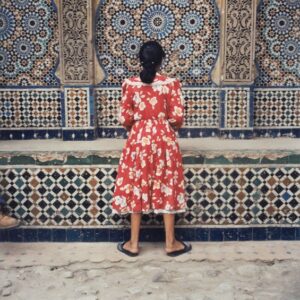 Yto Barrada. Girl in red playing jacks Girl in Red – Playing Jacks – Tangier-Fille rouge – Jouant aux osselets – Tanger 1999 Chromogenic print 125 x 125cm Edition 5 Part of the series A Life Full of Holes: The Strait Project
Courtesy of the artist and Sfeir-Semier Gallery, Beirut/Hamburg
A girl in a red dress is facing an old Moroccan wall of mosaic. She has her back to us. We cannot stare at her or see what she is doing. Yto Barrada explains that her subjects often face the other way as they look across the Straits of Gibralter to a distant Europe for which they yearn and from which they are barred. But she is also a girl playing jacks and wearing a red dress, patterned in floral bursts. Maybe all of these things, which don’t fit or cancel, do add up to a life, albeit a life full of holes, or full of fragments. Yto Barrada wanted to capture this holistic life but felt that she could not do so in the language of university research, which she was undertaking.
I was just working on what was my [politics] dissertation and I felt a little frustrated because I couldn’t use their stories, personal stories; there’s personal experiences, there’s coincidences, there’s lots of material you can’t use in a dissertation, so I was sort of overwhelmed by collecting stories, found things, objects people lost on the checkpoint. There were lots of things with humour, poetry – what do you do with that in a dissertation? You’re supposed to get rid of it! I tried to mix all these, and then I went to study art. (Yto Barrada)
The politics that Yto Barrada was studying would have been enriched by the stories of the lives of a girl in a red dress, playing jacks. Did she have to give it up, I wonder?
All of our lives are full of holes and gaps. None more so than the Diasporic artists and writers, whose lives and imaginations have provided such a treasure of images and ideas throughout this book of fragments. They chart their migrations and many lives, languages and memories. These can be small and seemingly trivial. We cannot see what the girl in the red dress is doing, but Barrada is quite specific that she is playing jacks. I loved playing jacks in the playground. This was the last thing I would have imagined this girl in Yto’s photograph as doing. Jacks. Little cross shaped metal bits with knobs on the ends and a tiny bouncing rubber ball. You throw the little ball into the air, then you grasp first pairs, then groups of three, then fours, which you clutch quickly in time to catch the falling little ball. Ball falls without the catch and you are out. Eventually the winner grasps all the jacks – ten of them – and catches the ball.
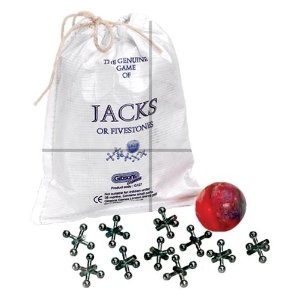
It was a playground craze that lasted and lasted and improbably I was expert, notwithstanding my shaky hands. I have not thought about jacks for the best part of half a century. A miniscule connection of play across borders between strangers of different times and places. Yto Barrada simultaneously captures the politics of uneven power with their border controls, and the little big stories that make for cracks in the barrier.
“The fact that the border is closed creates this situation of longing, desire to cross, and the violence of that desire is that it’s confronted to a wall”. (Yto Barrada)
Up against a wall
Of borders and power,
Of Europe and Africa
A child,
(Plays jacks,
Loves her red dress)
Who plays jacks
Was a jacks champion
A life full of holes
Of openings and gaps
Of tiny pieces of red
Glowing.
I began this book small by peeling carrots because I was thinking big about being human. It turns out that small became big and the carrots metamorphosed into a pink hat, a scruffy duffle bag, ‘Ghana must go’ bags, plastic gloves, a plate fit for Jewish chopped herring, Martin’s gatkas, bran muffins and my Bobba’s boot. These objects were light as air in their capacity to shape shift. They were dense and weighty in their ability to be portals into history, politics, families, Yiddish humour, happenstance and a lot of song and dance. These mundane things were not metaphors, with their capacity to speak with malice aforesaid. Just say the word – AFRICA – and it is a metaphor already polished and executed. Give me a blue bucket, a pair of old shoes and a chicken any day.
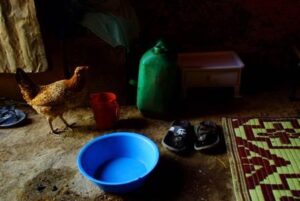
Aida Muluneh. Ethiopian. Chicken and Blue Pail 2008
Matt on fuji paper and aluminium, 80 x 60cm
Copyright and courtesy of Aida Muluneh.
I love the trace of the feet in the well-worn shoes. Shoes again. Shoes which connect us to the planet, which protect us from the earth, which centre us on the ground.
Is Aïda Muluneh the one peeking in, having been born in Addis Ababa but mainly living all over the world? She has returned to Ethiopia after nearly three decades and looks at her world with the double eyes of the Diasporic and the citizen. To re-discover the substance of the place she left, she photographs the bric-a-brac of the domestic every-day.
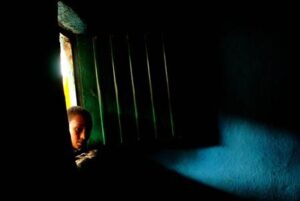
Aida Muluneh Peeking through a window 2008
Color photograph. Copyright and courtesy of Aida Muluneh.
Or is that me staring through the window into a room full of stuff through the segue of Aida Muluneh’s photograph?
This peeking through a window into a room, straining to see the mundane stuff inside, to see the stuff of the world, was also the vision of a white American male poet, nearly a century earlier. The reverberation of their mutual understandings is lovely –
so much depends
upon
a red wheel
barrow
glazed with rain
water
beside the white
chickens.
William Carlos Williams The Red Wheelbarrow
Copyright and courtesy of Carcanet Press.
William Carlos Williams was a poet at night and a medical doctor by day. Perhaps sick bodies helped him to find the treasure of the rain- water- glazed- wheel- barrow. His chickens are white; Muluneh’s are brown and speckled. His wheelbarrow and her jug are red, as red as the dress of Yto Barrada’s jacks playing girl.
A mosaic.
Solid, ordinary stuff has special meaning when lined up in the battle against prejudice and poverty. And the cottony language of fabric – patched, embroidered and needleworked – has been a creative, everyday sanctuary for women and their stories. As in Barrada’s photograph, there is no face in Grace Ndiritu’s “still life with textiles”, but there is a tale. The body melds with the textile whose exuberant pattern appears to converge on the vortex of the woman’s genitalia, which seem to be represented in the fabric itself. So much concealed and so much displayed.
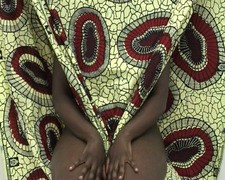
Grace Ndiritu. British of Kenyan Parents.
Still Life with Textiles – part of Still Life series (2005 – 7)
Medium: Video. Copyright and courtesy the artist
Even more is revealed and concealed in Lubaina Himid’s kangas, which translate cloth into paper and words. Kangas are brightly coloured East African wrap-arounds, which can include Swahili sayings, warnings and proverbs. Lubaina Himid, who was born in East Africa, took this cotton site and designed her vision for a series of kangas, with her own words of wisdom and warning. Viewed through Grace Ndiritu’s still life, this kanga carries a strange, incomplete message.
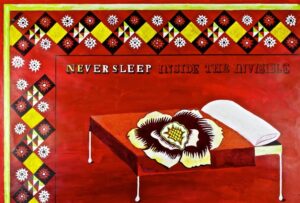 Lubaina Himid. Kangas and other Stories An exhibition of paper-works and paintings on small canvases shown at the Peg Alston Gallery New York in 2008
Copyright and courtesy of the artist.
The body on the bed is a genital cloth flower, framed by a fabulous mosaic of squares of circles and rectangles of colour. How might its warning end? Never sleep inside the invisible what? To what must we remain ever vigilant? Is there a real body beneath the mixed message petals, which seems to be also a watchful eye, a bloodied threat and a cover? Perhaps the sentence is complete without the stop and ‘invisible’ is a noun and not an adjective. The invisible conjures up a demonic spirit world, which populates our unconscious nightmares, unless we face our monsters.
Bodies,
Fossils and faces,
Imperfectly stitched brains,
Seam by seam
On which so much depends.
As I come to the end of my stories, written in the antibubble of my life and the lives and works of writers and artists, who have propelled me, I think about Phyllis Ntantala, who called her life story a mosaic and from whom I take the title of this concluding fragment. She is a fellow South African and our lives touched and didn’t.
We see her face on her book cover, photographed when she was young. The cover is itself framed in a mosaic of African beads. She grew up under Apartheid and her family, like Nelson Mandela’s, came from royalty. These were families, which were privileged and pillaged. Simultaneously powerful and powerless. Ntantala married the famous scholar and thinker, A.C.Jordan, an African intellectual with a European name.
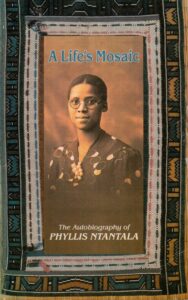
Lives intersect perhaps lightly, hardly, by way of a childish game of jacks or more significantly, but only in retrospect. Ntantala’s husband, A.C. Jordan, taught at the University of Cape Town from 1946 until 1962 where he was the first African staff member. When the Centre for African Studies, my erstwhile domain, was awarded a Chair, it was named after him – The A.C. Jordan Chair in African Studies. Although campus politics ensured that the filling of that Chair became an obstacle course, winning the resources for it was a milestone in my career.
How Ntantala rails in her life story at being known as A.C.’s wife or as Pallo’s mother – Pallo Jordan, the well-known ANC politician! She has so many more lives and loves than those of the famous men she married and mothered. She writes the mosaic of her fractured, brave, multi-faceted complicated life, as a mother, a wife, an activist and a migrant to the United States. The cover picture is of a beautiful, intellectual woman, who reveals in her memoir that her husband, A.C., by then dead, had not really been the love of her life. She respected and admired him, but she tells us, her readers, about another man, the one who had occupied the space of passion in her heart.
We at the University of Cape Town got her permission to use her late husband’s name for our Chair and we invited her to celebrate with us and flew her to Cape Town. I am photographed with her.
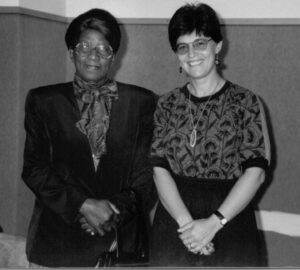
What an awful, posed photograph! We are both full frontal, full headed, be-spectacled, self-protecting with our stiff, crossed hands. You may see our faces, but they reveal nothing. We do not hug, or look at each other. Our folded hands barricade us. A black woman and a white woman without caring or history.
What she did not know was that her publisher had sent me her manuscript to read anonymously and to recommend whether it should be published. It was a mammoth unedited tome in which she had tried to include all the bits, pieces, moments, phases and fractures of her whole life. It did not work as a book, or at that time I thought so. But it was a treasure and had to be published and I worked with the publisher on suggesting large cuts.
I wonder about them now. How did I choose what pieces of her life should be shared or erased? Would I make the same choices now? At the lunch, we talked ceremoniously about the Chair, the honour, the accomplishments of A.C. All the while I was thinking about that other man, the one she did not marry. The photograph of the two of us reflects the inheritance of Apartheid, which disabled two women to communicate. Or perhaps not. We South Africans born into that system ascribed everything to it and thereby colluded with its clout. I do remember feeling constrained by my other role as anonymous reader.
A life full of holes.
Phases of life
which change us
She stayed in America
I returned to South Africa
I am now living in Salford.
Contemplating my own life’s mosaic.